What is UDI?
UDI stands for Unique Device Identifier. It is a unique code used to identify a medical device and its key attributes. UDI also refers to Unique Device Identification, which reflects the entire system that uses the UDI unique code.
Get Your Free ConsultationWhy is UDI Important?
The UDI system enables identification of a medical device at any time during its life cycle, from manufacturing and distribution to import, inventory release, and patient use.
What Does UDI Look Like?
Each health authority creates its own regulations that define UDI and the UDI system, but some parameters have been globally harmonized by the International Medical Device Regulatory Forum (IMDRF) and standards organizations identified as Issuing Agencies (e.g., GS1, HIBCC, ICCBBA).
UDI structure
Device Identifier (DI)
Mandatory, fixed portion of UDI that identifies the labeler and the specific model or version of the device.
Production Identifier(s) (PI)
Conditional, variable portion of a UDI that can identify one or more production data elements:
- Serial number
- Lot or batch number
- Expiration date
- Manufacturing date
- Distinct identification code for a human cell, tissue, or cellular and tissue-based product (HCT/P) regulated as a device.
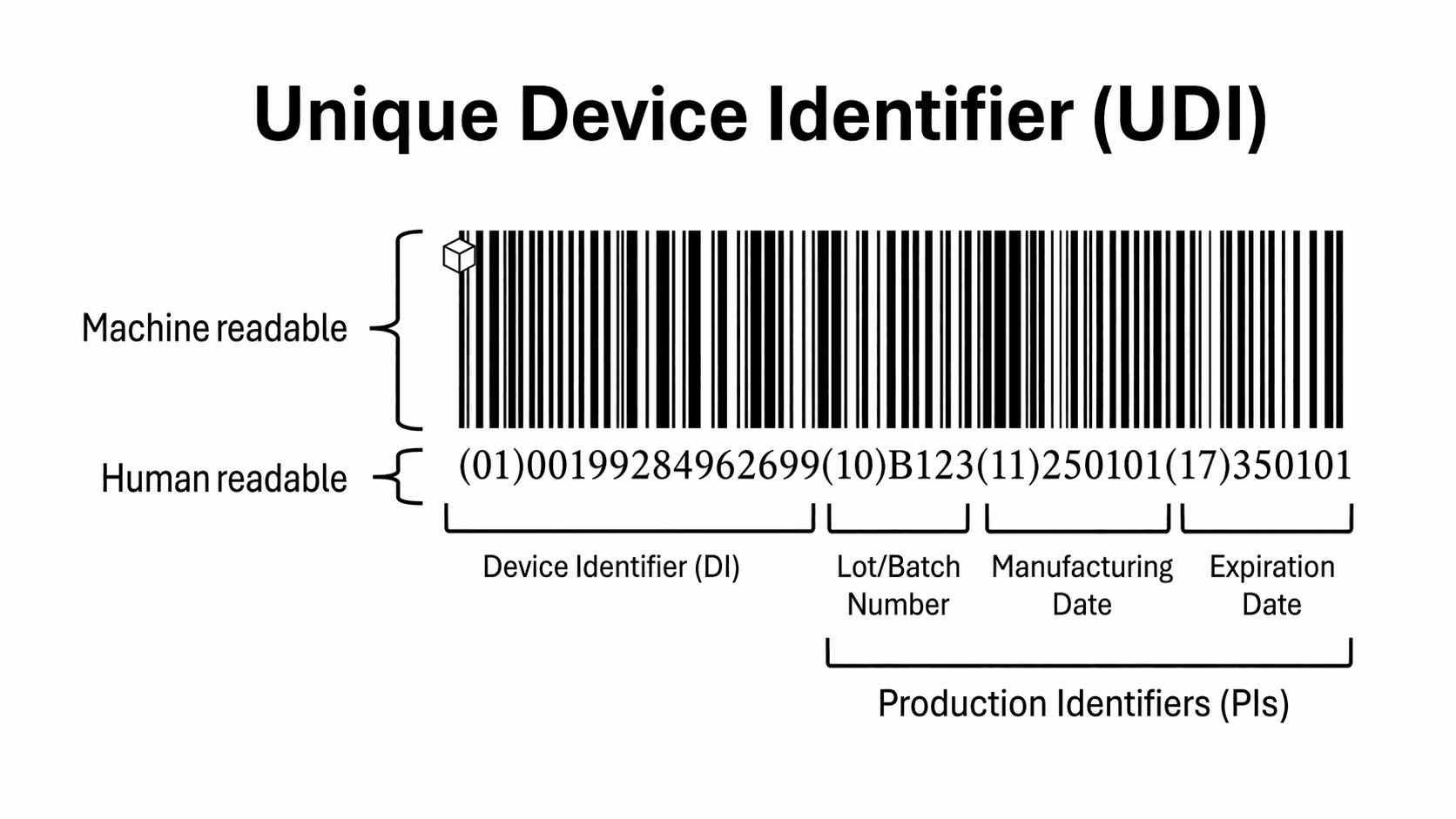
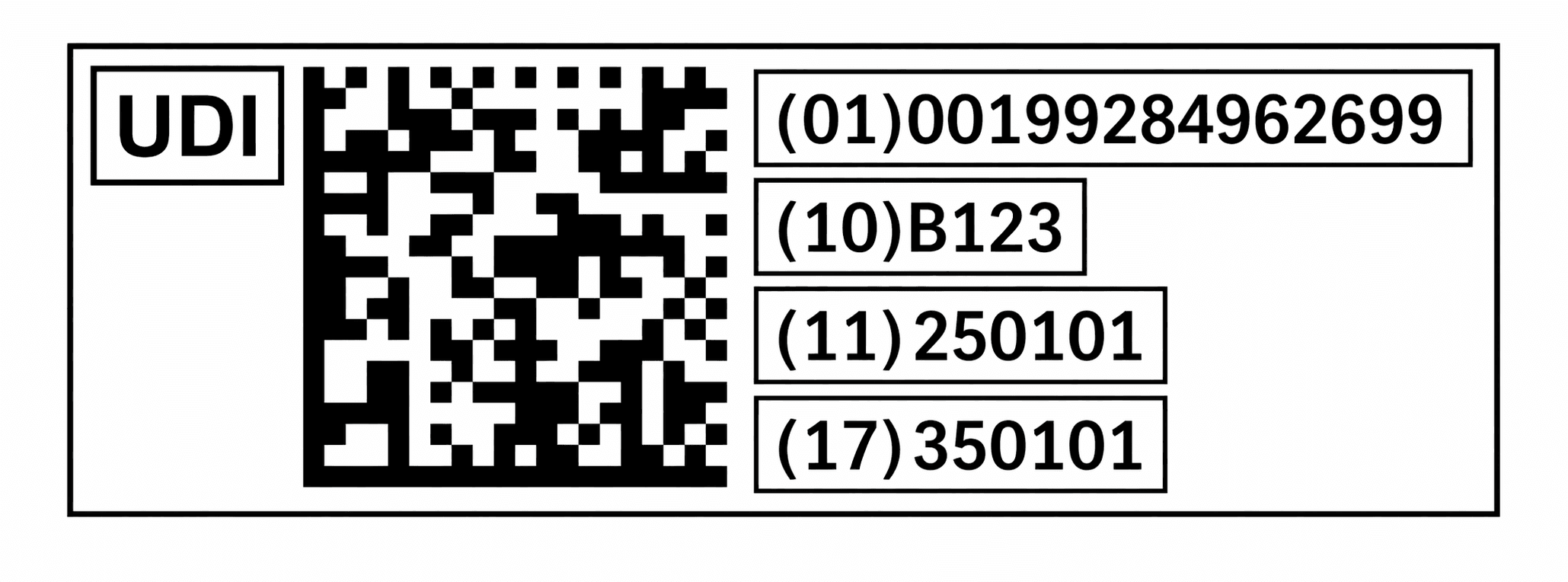
A medical device labeler is required to present the UDI on labels and packaging in two formats:
- Human-readable plain-text
- Machine-readable format using automatic identification and data capture (AIDC) technology (e.g., barcode or 2D DataMatrix code)
Master UDI-DI
The EU recently introduced a Master UDI-DI for highly individualized devices, including contact lenses, spectacle frames, spectacle lenses, and ready-to-wear reading spectacles. The Master UDI-DI serves as an identifier for a group of devices with similar design parameters and aims to decrease the number of UDI-DIs entered in the EUDAMED database.
Need support with UDI for highly individualized devices?
Contact us todayWhat is the Status of Global UDI?
The data collected for UDI systems are far more than just Device Identifier and Production Identifiers. Depending on device type and regional requirements, it can include over 100 data elements. Navigating these differences requires ongoing regulatory intelligence and compliance awareness across worldwide jurisdictions.
Many countries have established their own specific UDI regulations, including:
- United States
- European Union
- Australia
- China
- Brazil
- Taiwan
- South Korea
- Saudi Arabia
- Singapore
- Switzerland
And the list continues to grow as more countries adopt UDI frameworks to strengthen device identification and patient safety.
Need help applying UDI requirements to your device portfolio?
UDI requirements vary by market, device type, data model, and labeling workflow. UDI Experts helps manufacturers interpret requirements, build compliant data sets, update labeling, and prepare submissions for systems such as FDA GUDID and EUDAMED.